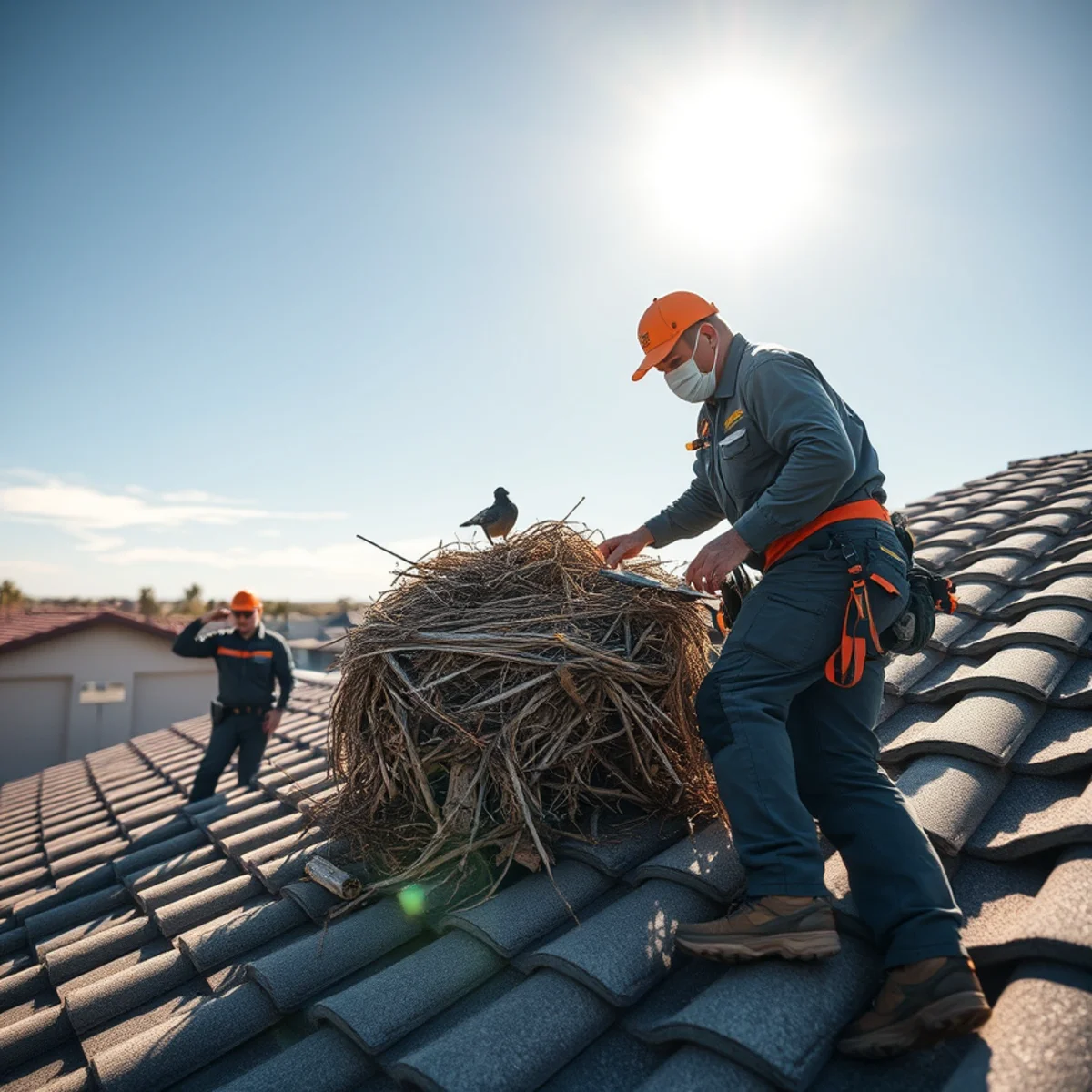
Answer first: Pigeon-dropping roof cleanup should begin with a safe assessment of nest activity, debris volume, runoff, roof material, solar equipment, and access. The work may require controlled removal, surface cleaning, disinfection where included, drainage clearing, and separate exclusion. Do not dry sweep heavy waste or assume cleaning alone prevents the birds from returning.
Pigeon droppings on a roof are more than an appearance problem, but the right response depends on how much material is present, where it has collected, and what lies beneath it. A few fresh spots on an open parapet are a different job from compacted nests beneath a solar array.
This guide does not replace an on-roof assessment or appropriate protective practices. It explains why controlled removal, surface treatment, drainage protection, and exclusion belong in the same conversation.
How to use this guide
- Start with start with the source, not the stain. Use the detailed section below to record what is true at this property before choosing the next action.
- Then check why dry sweeping is a poor default. Use the detailed section below to record what is true at this property before choosing the next action.
- Compare the evidence with removal and disinfection are different steps. Use the detailed section below to record what is true at this property before choosing the next action.
- Finish by reviewing protect drainage and lower surfaces. Use the detailed section below to record what is true at this property before choosing the next action.
Start with the source, not the stain
Droppings often travel. Wind moves dry material, and rain carries waste along roof slope, through scuppers, and onto lower surfaces. The wall with the worst staining may not sit below the active nest. Follow bird flight paths and inspect protected roof features before defining the cleanup area.
A source assessment also identifies whether birds are currently present, whether eggs or young may be involved, and where they could move when disturbed. Cleaning without this information can scatter the colony to nearby roof features.
Why dry sweeping is a poor default
Dry material can break into dust when swept or scraped. Roof work also exposes the cleaner to fall hazards, sharp material, fragile surfaces, wiring, and hot equipment. The correct method depends on contamination, access, surface type, and the ability to contain runoff and debris.
Owners should not climb onto a roof simply to confirm what they can already see from below. Photos from a safe location and a professional assessment are more useful than turning an observation into an avoidable injury.
Removal and disinfection are different steps
Disinfectant applied over thick droppings and nests cannot substitute for physical removal. Organic debris can block contact with the underlying surface. A complete scope explains how nests, feathers, droppings, and other material will be collected before affected surfaces are addressed.
Surface condition matters. Roofing membranes, tile, coatings, metal, solar components, and painted stucco may respond differently to pressure, moisture, and cleaning agents. More aggressive cleaning is not automatically better if it damages the roof.
Protect drainage and lower surfaces
A cleanup plan should consider where loosened material and water would travel. Gutters, scuppers, valleys, patios, vehicles, landscaping, and neighboring surfaces may sit below the work zone. Washing contamination into a drain path without containment only relocates the mess.
Nesting material may already be blocking drainage. That obstruction should be documented and removed carefully. After cleanup, the roof path can be checked again before proofing limits future access.
Close the roost after it is clean
Pigeons return to reliable shelter. If panels, parapets, ledges, or equipment remain accessible, a cleaned roof can be occupied again quickly. Exclusion changes the condition that caused the contamination.
The sequence should avoid trapping birds and should address the full pressure area. When proofing is installed, photos of clean surfaces and finished edges provide a useful property record.
Questions to ask about an estimate
Ask what areas are included, how access will be managed, what debris removal and disinfection mean in the proposed scope, how runoff is controlled, and what proofing follows. Confirm whether older mesh or deterrents will be removed.
Pricing should reflect roof height, pitch, contamination, obstructions, panel perimeter, surface condition, and disposal—not a generic per-panel number. A clear explanation lets you compare proposals on equal terms.
Expert insight: Create a roof-condition record without climbing
From safe ground locations, photograph each elevation at the times pigeons are most active. Capture landing edges, visible panel gaps, droppings, staining, blocked outlets, and the direction runoff travels. Note recent rain and whether debris appeared afterward. Do not use a ladder or enter a roof area simply to improve the picture. The assessment exists to document conditions that are not safely visible.
Ask the provider to organize roof photos into three groups: active nesting and debris, cleaned or treated surfaces, and completed proofing. The groups should show enough surrounding roof detail to understand location, not only tight close-ups. Keep them with solar and roofing records so a future contractor knows which edges contain barrier material and what was present before it was installed.
After the work, observe the property at the same times used for the original record. Watch for attempted entry, new debris, runoff, and birds shifting to a nearby feature. Do not expect every pigeon in the neighborhood to disappear. The success question is whether the protected roof space remains unavailable and whether new contamination stops accumulating.
Before closing your notes, answer four property-specific questions. What did you document about start with the source, not the stain? Which condition from questions to ask about an estimate can you check without creating a safety risk? How would you answer “Can rain wash pigeon droppings off my roof?” using only evidence from this address? Finally, which date, location, weather event, repair, or contractor visit best explains when the pattern changed? Keep the photos and answers together. If the evidence points toward a current infestation, concealed route, roof hazard, or repeated indoor activity, bring that packet to the estimate. It gives the service provider a usable timeline and keeps the recommendation tied to this property instead of a generic version of pigeon droppings roof cleaning El Paso.
Turn those observations into a one-page service brief. Start with the evidence connected to start with the source, not the stain, then make a second column for questions to ask about an estimate. Label each photograph with its room, wall, roof edge, or exterior side; include the date and any change after weather, cleaning, construction, or another contractor visit. Use the question “Should solar panels be cleaned during pigeon work?” as a final check for missing context. A concise record makes it easier to compare the visible symptom with the conditions described in this pigeon droppings roof cleaning El Paso guide and keeps the estimate focused on the address in front of the technician.
The practical next step
Professional pigeon cleanup is a process: identify the colony, document the condition, remove debris in a controlled way, address affected surfaces, protect drainage, and close the return route. Annihilate Pest Control combines cleanup and disinfection with the pigeon-proofing specialty highlighted throughout its customer reviews.