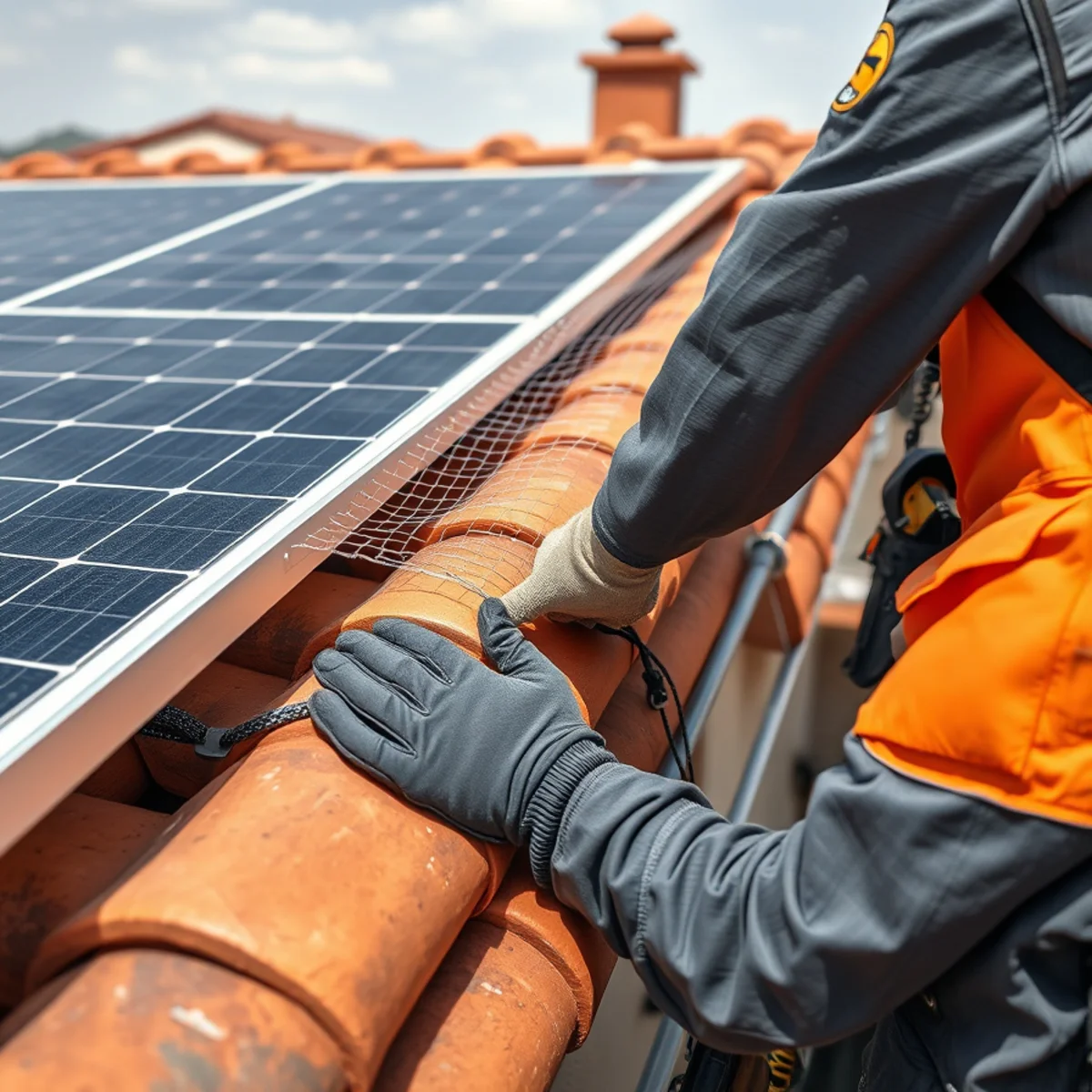
The gap beneath a solar panel is one of the most attractive pigeon shelters on a El Paso home. It is elevated, shaded, protected from many predators, and warmed by the roof. Once nesting begins, feathers, droppings, eggs, and debris can accumulate where they are difficult to see and harder to clean safely. Solar panel pigeon proofing closes that access without pretending every array has the same edge detail.
Annihilate Pest Control has a strong review record for solar-panel bird work. Customers describe failed installations being removed and redone, detailed before-and-after photographs, immediate changes in bird activity, fair explanations, and months-later follow-up. The key is workmanship at the transitions: corners, rails, conduit, tile contours, roof offsets, and narrow areas where a standard straight section cannot simply be attached.
Signs it is time to request solar panel proofing
- Pigeons repeatedly landing on the ridge or edge above the array
- Cooing, scratching, or flapping sounds beneath panels
- Nesting material or droppings washing out onto lower roof sections
- Birds entering at corners, conduit paths, or uneven tile gaps
- Loose, sagging, rusted, or incomplete mesh from a previous installation
- Recurring activity soon after a solar cleaning or temporary proofing removal
What is included in solar panel proofing
Full array-edge survey
The assessment measures separate panel groups and reviews corners, rail ends, conduit, tile channels, roof offsets, drainage, and old barrier sections. A total panel count alone does not reveal the openings birds are actually using.
Nest and debris coordination
Active areas are identified before closure. When cleanup is included, the scope states which nests and accumulated material can be removed, what surface treatment is planned, and whether access beneath the array limits the work.
Fitted perimeter barrier
Proofing follows the exposed edge while accounting for ventilation, drainage, array components, roof material, and future service access. Irregular transitions are cut and secured individually instead of hidden behind one loose straight run.
Photo record and handoff
Before-and-after photographs document concealed conditions and the finished perimeter. Owners also receive practical guidance for telling a future roofer or solar technician that proofing must be removed and restored deliberately.
Our service process
Array perimeter inspection
Every accessible edge is reviewed, including rail ends, corners, electrical paths, roof changes, drainage routes, and evidence that birds are using more than one opening.
Remove active debris
When cleanup is part of the plan, nesting material and accumulated waste are addressed before the edge is closed. The goal is not to trap birds or seal contaminated material beneath the array.
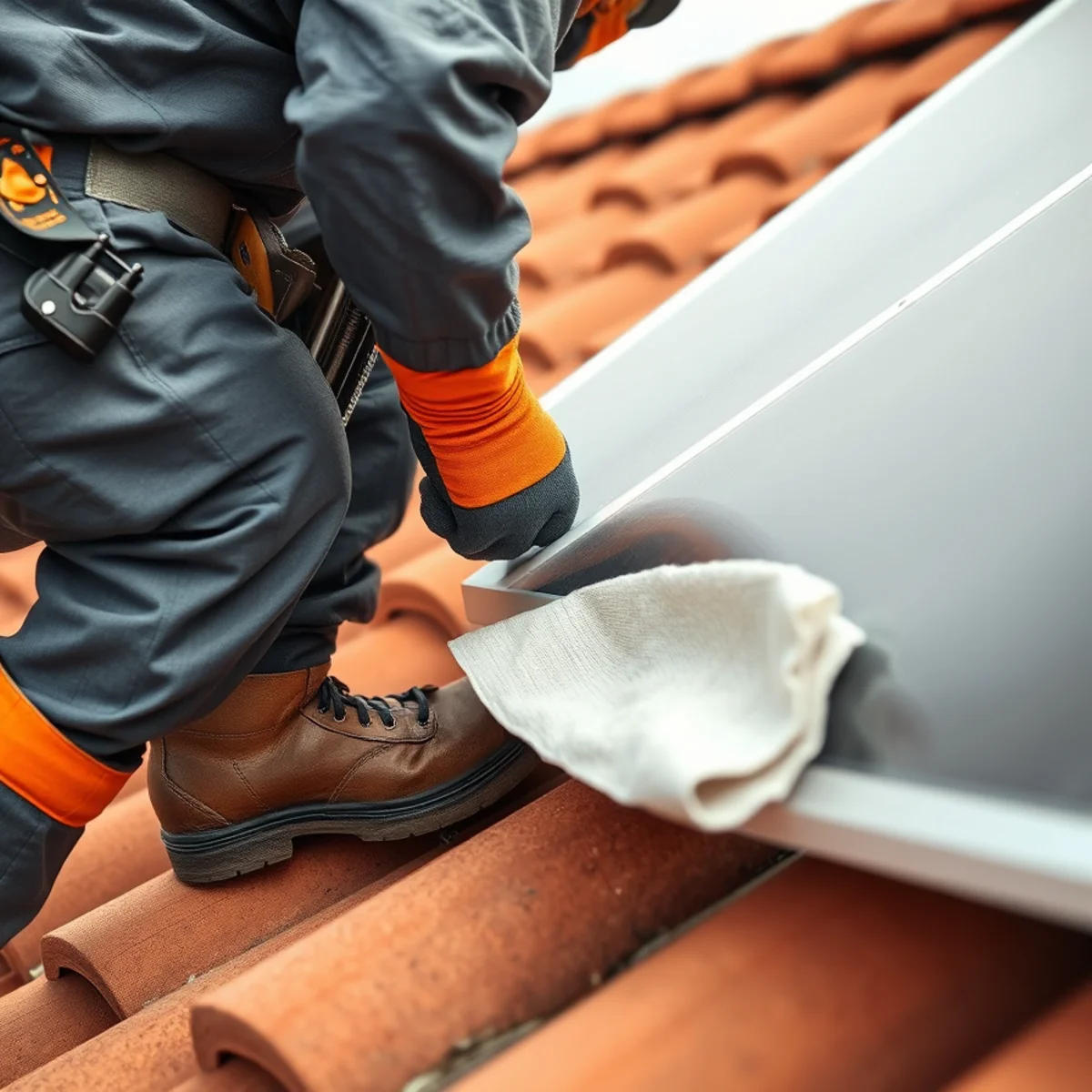
Fit the barrier
Proofing is shaped and secured around the actual array and roof profile. Attention goes to small bypasses where a bird can push through or where wind can work a loose edge over time.
Document and maintain
Finished-edge photos give the owner a record of the installation. If solar work is needed later, the proofing should be removed and reinstalled deliberately rather than bent out of the way.
Why panel-edge details decide whether proofing works
Pigeons do not need a wide doorway. A small opening at a corner can make an otherwise neat installation ineffective. Tile roofs add repeated contours. Rail extensions and conduit can interrupt a barrier line. Multiple panel groups create more corners and more opportunities to miss a route. The work succeeds when those exceptions receive as much attention as the easy sections.
The installation also has to coexist with the solar system. It should avoid unnecessary contact with sensitive components, preserve ventilation and drainage, and allow future technicians to understand how the barrier is attached. Careless fastening or a barrier that is difficult to remove can create problems the next time the array needs inspection.
What to do when older mesh has failed
Do not assume the birds defeated the entire concept. First find out why the installation failed. Common issues include open corners, loose attachment points, gaps around conduit, material that did not follow the roof profile, or sections displaced during later solar work. Photographs of the full perimeter help separate a local repair from a system that needs to be rebuilt.
If nesting material remains under the panels, address that as part of the new plan. Closing a clean, inspected space is different from wrapping a new barrier around an old colony. A complete scope should state what will be removed, what will be disinfected, and what proofing area will be installed.
Make the first visit more productive
Before requesting solar panel proofing, write down where and when you noticed pigeons repeatedly landing on the ridge or edge above the array, cooing, scratching, or flapping sounds beneath panels, nesting material or droppings washing out onto lower roof sections. Photograph evidence when you can do so safely, but do not disturb nests, droppings, mud tubes, harborages, or unfamiliar pests just to create a closer image. If you have used a product, installed an older barrier, moved furniture, repaired a leak, or changed landscaping, share the timing. Those details help connect the visible symptom to the route.
Clear access to the active zone without moving the problem into another room or structure. Be ready to discuss total exposed perimeter and number of separate arrays, roof pitch, stories, access, and roofing material, panel height, racking design, conduit routes, and irregular edges. A precise history allows the assessment to spend less time reconstructing the story and more time confirming the source, explaining options, and defining what should happen first.
What affects the estimate?
No fake flat price can represent every property. These factors shape the scope:
- Total exposed perimeter and number of separate arrays
- Roof pitch, stories, access, and roofing material
- Panel height, racking design, conduit routes, and irregular edges
- Amount of nesting debris and the sanitation scope
- Condition and removal needs of any prior proofing
Why choose Annihilate Pest Control for solar panel proofing
Proven attention to failed installations
Supplied reviews describe older solar-panel proofing being removed and redone, difficult sections documented, and bird activity changing after the work. That experience keeps the assessment focused on failure points rather than appearance from the street.
Pigeon control and cleanup under one roof
Annihilate Pest Control confirms solar proofing, pigeon control, nest and debris cleanup, and roof disinfection as separate but coordinated services. The estimate can define exactly which parts are needed instead of treating mesh as the entire job.
Array details determine the method
Tile contours, rail projections, narrow corners, electrical paths, multiple arrays, roof valleys, and prior hardware are reviewed before a barrier layout is proposed. No material or attachment claim is made before the actual system is seen.
Owner-led follow-through
Robert is repeatedly named in supplied reviews for clear explanations, schedule coordination, photographs, and follow-up. Those behaviors help when proofing must later be coordinated with a solar or roofing contractor.
Solar Panel Proofing across the El Paso service area
Solar-panel pigeon proofing is available in listed Texas coverage areas, including Eastside and Far East El Paso subdivisions, Horizon City, and Canutillo. Newer multi-array systems, Spanish-style tile contours, flat-roof sections, and older retrofits can create different exposed perimeters even when two homes have a similar number of panels.
Provide the complete property address, approximate panel count, number of separate arrays, roof type if known, and whether birds are currently entering underneath. Photos from the ground can help identify layout, but the proofing scope depends on roof access and edge conditions confirmed on site.
pest control in Eastside El Paso, pest control in Far East El Paso, pest control in Horizon City, and pest control in Canutillo are detailed in their local service guides.