
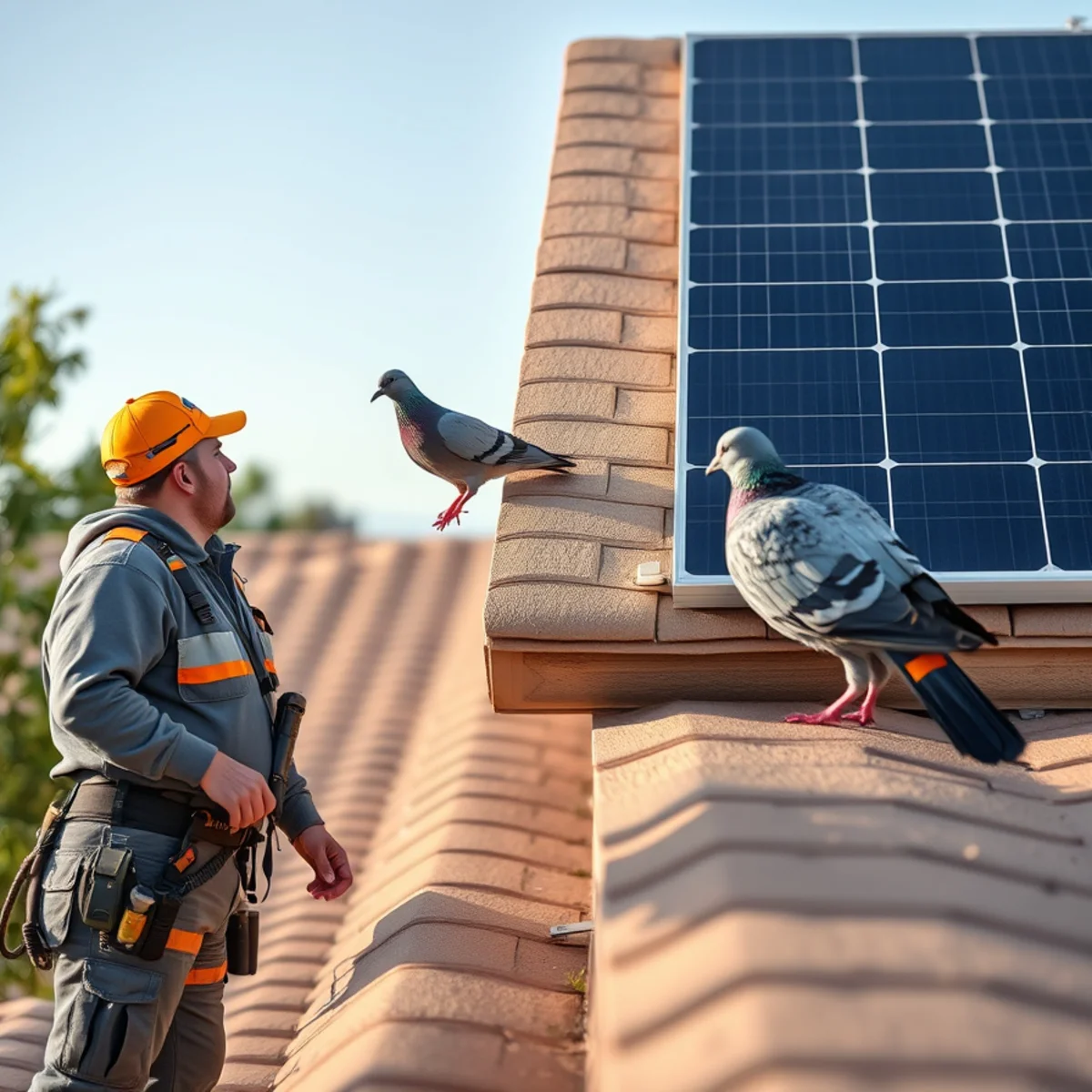
Answer first: The clearest signs pigeons are nesting beneath solar panels are repeated entry at one edge, early-morning cooing or scratching, nest material at drainage points, concentrated droppings, feathers or insects near runoff, visible chicks, and an established daily flight path. Observe from the ground, document several clues, and request a roof assessment.
Pigeons can occupy the space beneath solar panels for weeks before a homeowner sees a nest. The array hides activity from the yard, and droppings may wash down far from the point of entry. Learning the early signs helps you request an assessment while cleanup and proofing are still manageable.
Do not climb onto the roof to confirm a suspicion. Observe from the ground, record patterns, and use photographs or binoculars if you can do so safely. The combination of several clues is more meaningful than a single bird resting briefly on the ridge.
How to use this guide
- Start with 1. the same birds land at the same panel edge. Use the detailed section below to record what is true at this property before choosing the next action.
- Then check 2. cooing, scratching, or wing noise above a room. Use the detailed section below to record what is true at this property before choosing the next action.
- Compare the evidence with 3. nest material appears at gutters or lower roof edges. Use the detailed section below to record what is true at this property before choosing the next action.
- Finish by reviewing 4. droppings accumulate in a narrow band. Use the detailed section below to record what is true at this property before choosing the next action.
1. The same birds land at the same panel edge
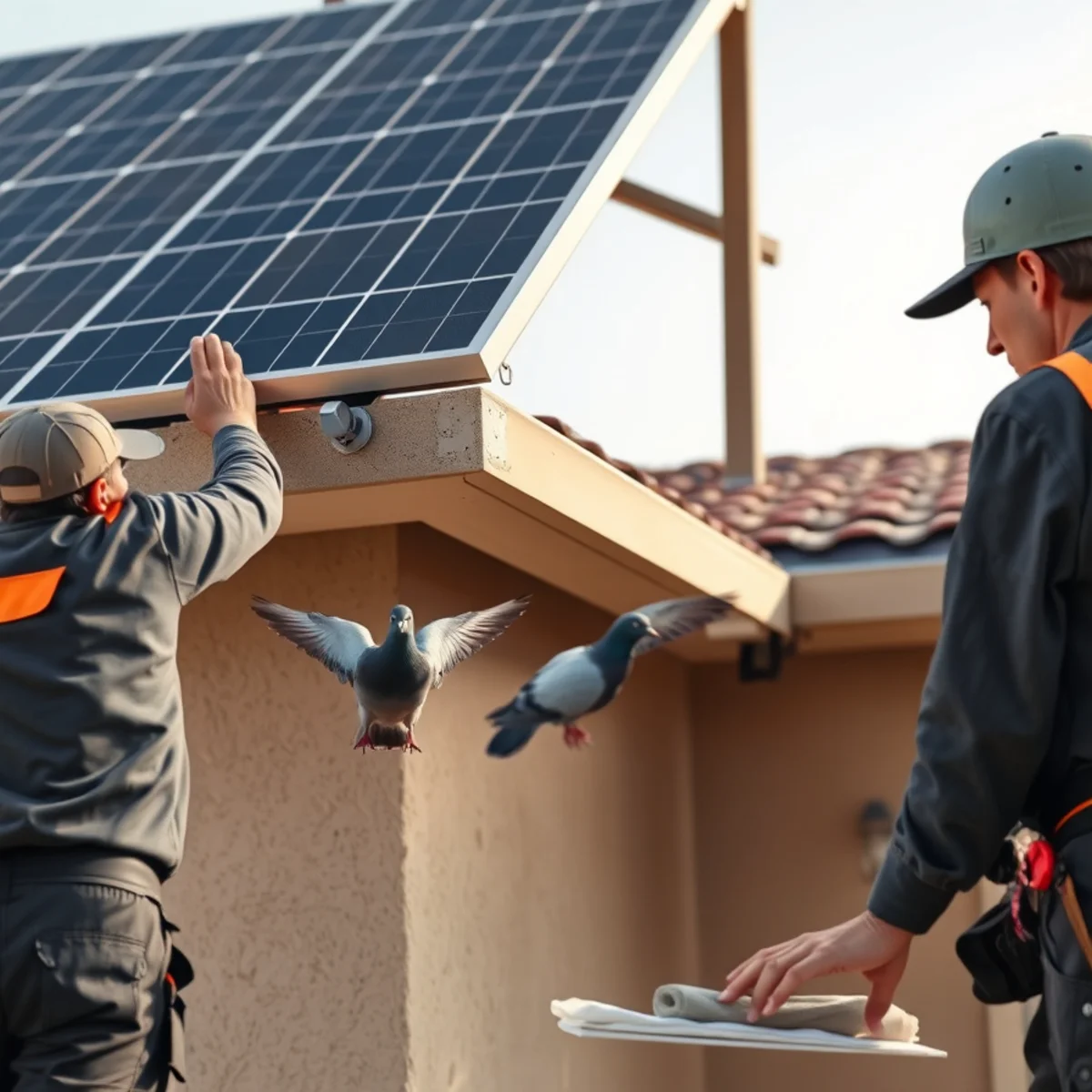
Pigeons develop routines. A pair that approaches one corner every morning, pauses on the ridge, and then disappears beneath the array is showing more than casual roof use. Note the entry edge and time. The birds may leave during the day and return near dusk.
One photograph can help, but a short pattern log is better. Record how many birds arrive, which edge they use, and whether any carry twigs or grass. This information helps an inspector focus on the most active side without assuming it is the only opening.
2. Cooing, scratching, or wing noise above a room
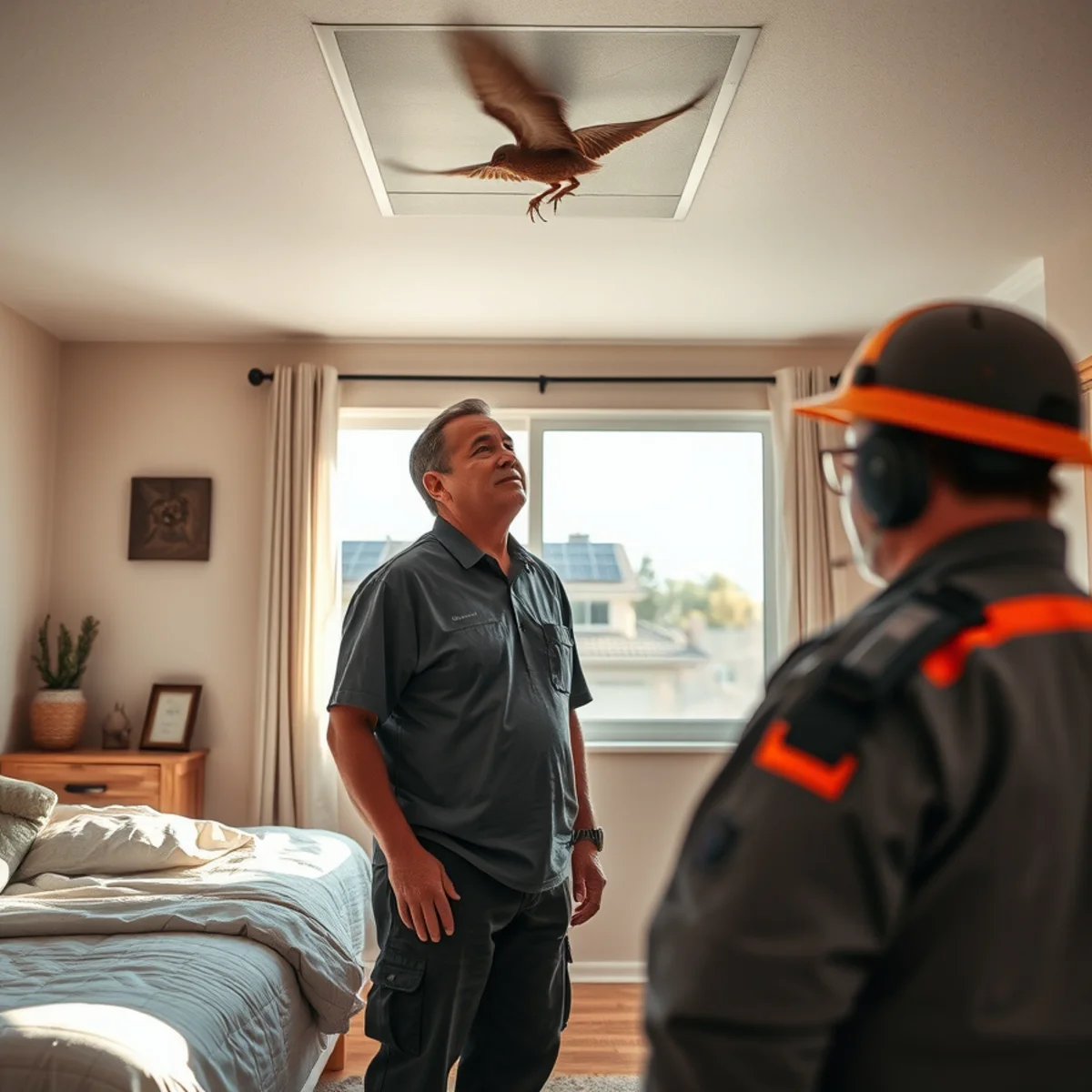
The roof surface can transmit sound into bedrooms and quiet spaces, especially early in the morning. Cooing suggests birds are spending time rather than merely passing over. Scratching and flapping may occur as birds move through a tight edge or defend a nest.
Sound location is approximate. Framing and the panel layout can carry noise away from the actual nest. Tell the inspector which room and ceiling area are most noticeable, but let the roof evidence determine the final location.
3. Nest material appears at gutters or lower roof edges
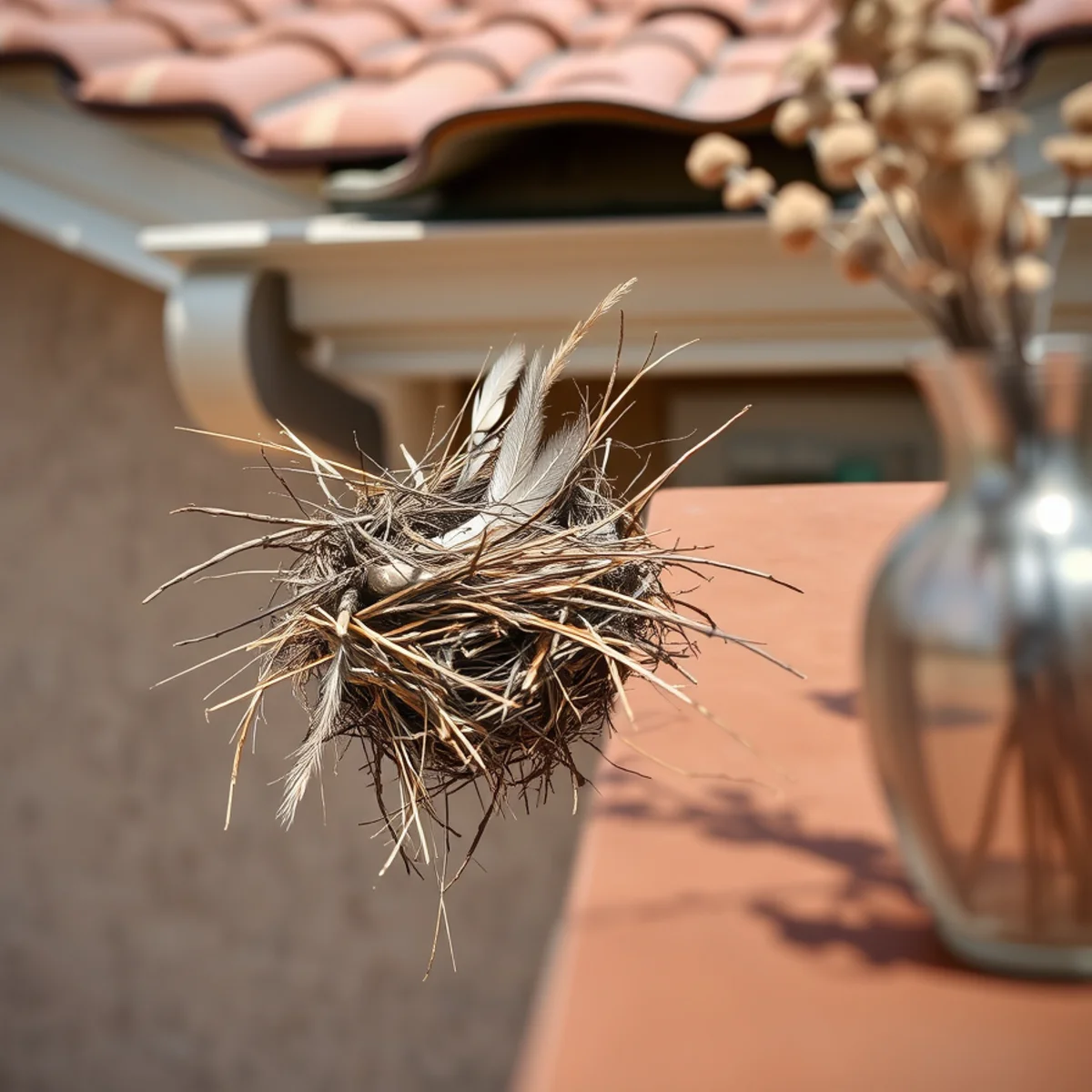
Twigs, feathers, dried grass, and small debris can wash or blow from beneath panels. Material may collect in gutters, scuppers, valleys, or the lowest roof edge. A sudden increase after wind or rain is worth documenting.
Do not assume the visible pile is directly below the nest. Water follows roof slope and drainage channels. A roof-level view is needed to trace the debris back to the protected space.
4. Droppings accumulate in a narrow band
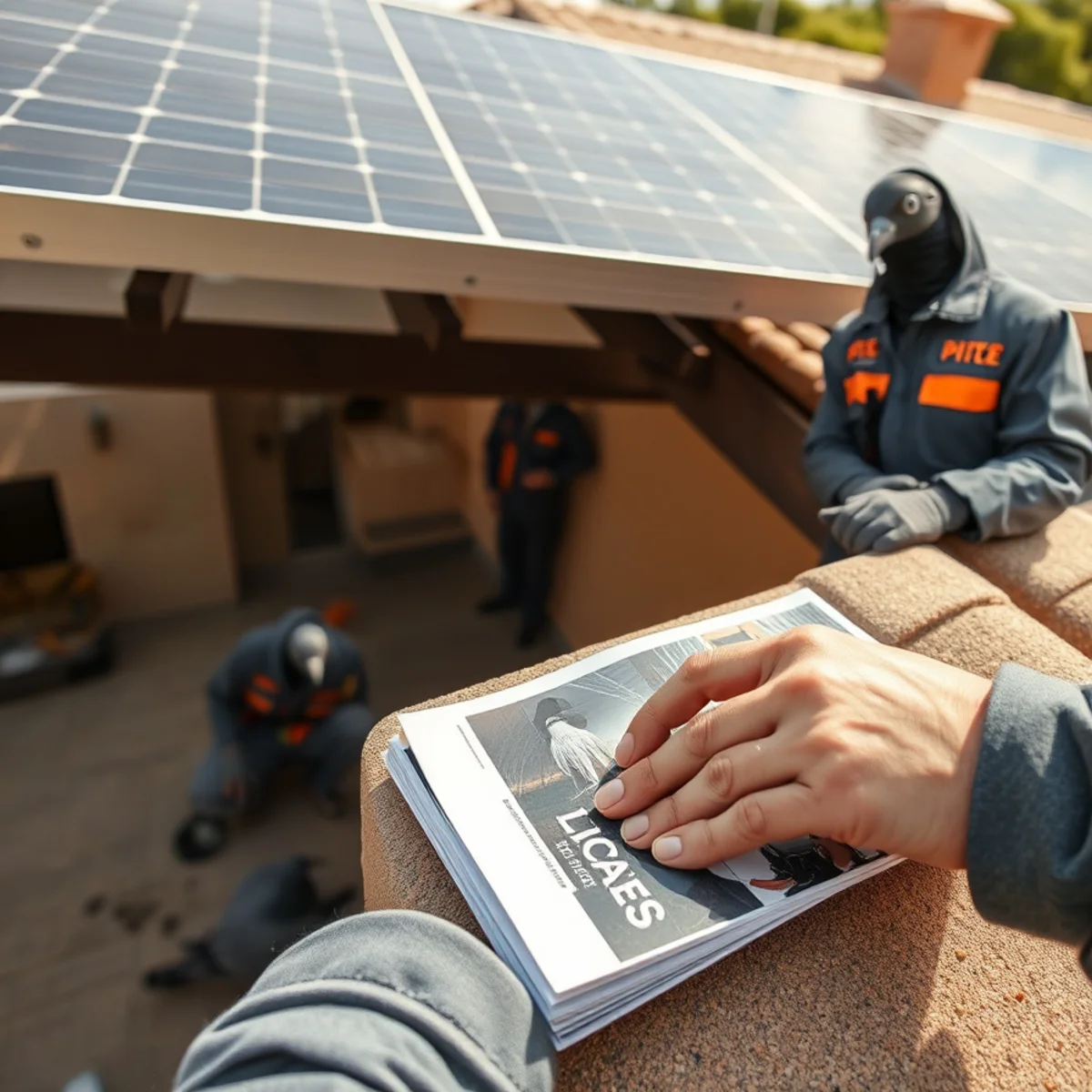
A repeated landing edge often develops a concentrated line of droppings. You may also see staining on stucco, a patio, an air-conditioning unit, or a driveway below a preferred perch. The waste can be only a small fraction of what is hidden beneath the panels.
Avoid dry sweeping heavy accumulation or washing it blindly across the roof. Cleanup method and runoff control should match the amount and location of material. Photograph visible zones from the ground for the estimate.
5. Feathers and insects appear near roof runoff
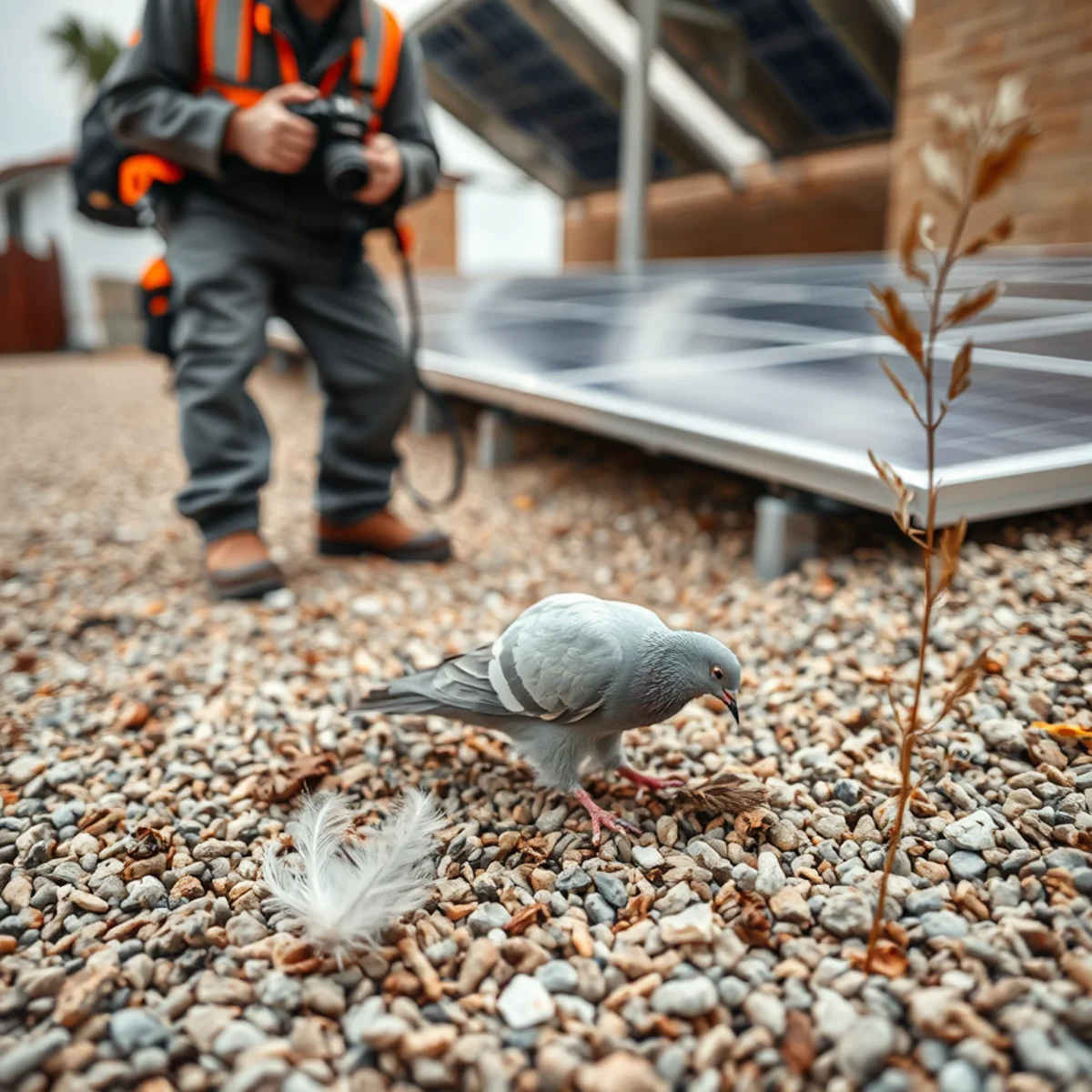
Feathers are a straightforward sign, but secondary insects can also develop around long-term nests and organic debris. Their presence near a ceiling, attic vent, or roof runoff does not prove the exact source, yet it strengthens the case for an inspection.
Report both the bird activity and the insect activity. Addressing only the indoor insect may leave the roof harborage untouched. Cleanup, disinfection, exclusion, and pest treatment may need to be coordinated.
6. Birds keep returning after noise or scare devices
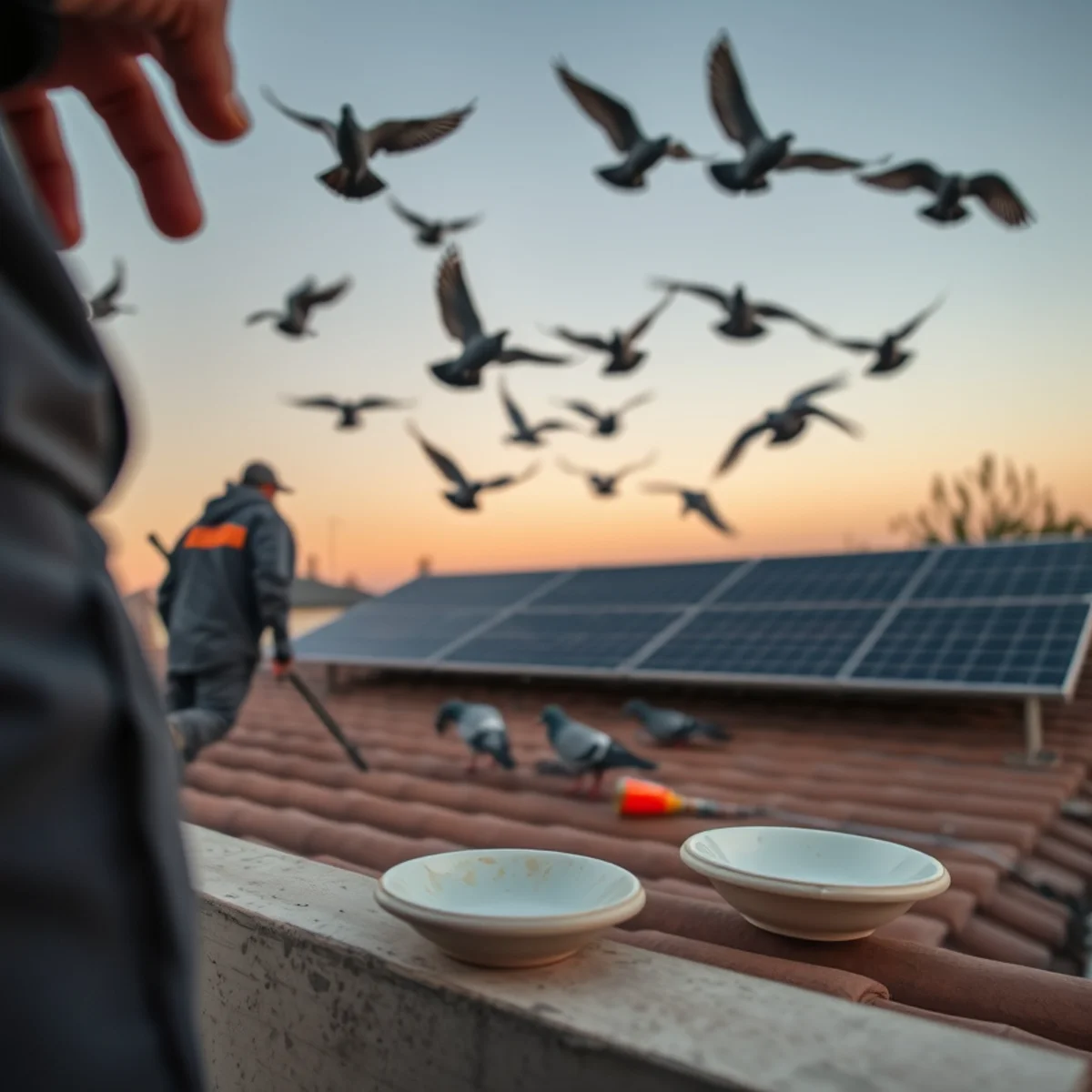
Visual deterrents and sudden noise may move pigeons briefly, but a protected nest is a strong reason to return. Birds can become accustomed to static objects that do not change or physically block access.
Repeated return tells you the roof is providing more than a convenient perch. At that point, identify and close the shelter rather than escalating a series of temporary scare tactics.
7. Existing mesh looks loose or incomplete
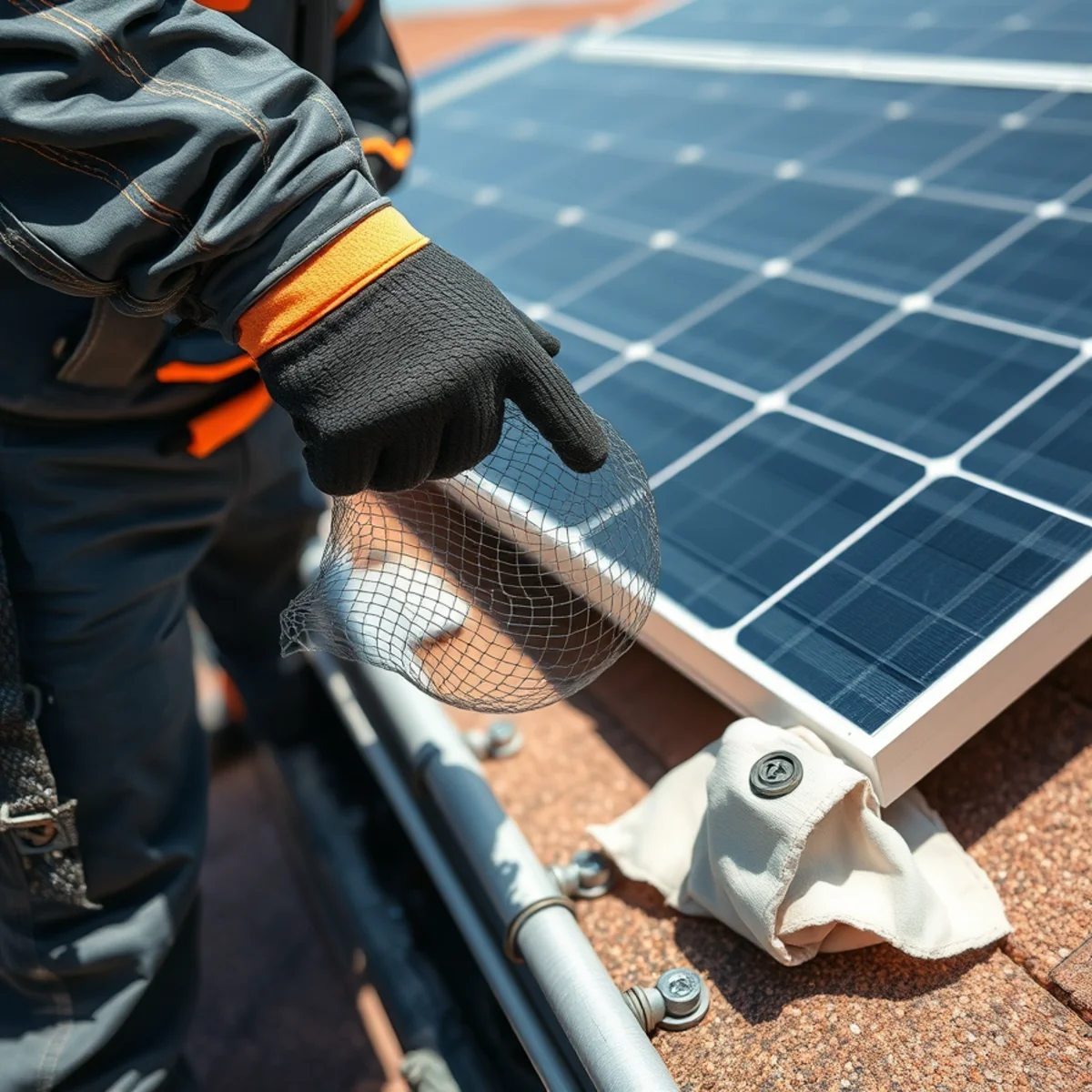
Older proofing may sag at corners, separate around conduit, or remain open where a panel row changes height. Solar technicians sometimes bend a section aside for access and do not restore it fully. Pigeons quickly test these weak spots.
Photograph the visible defect without climbing. A professional can determine whether one section needs repair or the entire perimeter was installed in a way that is likely to keep failing.
Expert insight: Document the panel edge before the roof visit
Watch the array from safe ground positions at two consistent times, ideally when birds leave in the morning and return later in the day. Record the corner, rail end, or roof side they use instead of describing the activity only as “under the panels.” Photograph visible nesting material, droppings below the edge, and any mesh that appears bent or detached. Never climb onto the roof for a closer picture; the service assessment should handle inaccessible evidence.
Separate repeated nesting signs from occasional landing. Regular entry beneath the same edge, birds carrying material, cooing from below the array, debris washing from one roof section, or chicks heard near a panel are stronger clues than pigeons resting briefly on top. Note whether recent solar, electrical, roofing, or cleaning work changed the pattern. A barrier can look complete from the street while one serviced corner remains open.
Keep the observations with the solar paperwork when available. That record helps the provider plan safe access and examine the whole array perimeter. After the work, repeat the same ground-level observation and note whether birds can still enter the protected space or fresh debris continues to accumulate.
Before closing your notes, answer four property-specific questions. What did you document about 1. the same birds land at the same panel edge? Which condition from 7. existing mesh looks loose or incomplete can you check without creating a safety risk? How would you answer “Does one pigeon on the roof mean there is a nest?” using only evidence from this address? Finally, which date, location, weather event, repair, or contractor visit best explains when the pattern changed? Keep the photos and answers together. If the evidence points toward a current infestation, concealed route, roof hazard, or repeated indoor activity, bring that packet to the estimate. It gives the service provider a usable timeline and keeps the recommendation tied to this property instead of a generic version of signs pigeons are under solar panels.
Turn those observations into a one-page service brief. Start with the evidence connected to 1. the same birds land at the same panel edge, then make a second column for 7. existing mesh looks loose or incomplete. Label each photograph with its room, wall, roof edge, or exterior side; include the date and any change after weather, cleaning, construction, or another contractor visit. Use the question “Should I block the opening immediately?” as a final check for missing context. A concise record makes it easier to compare the visible symptom with the conditions described in this signs pigeons are under solar panels guide and keeps the estimate focused on the address in front of the technician.
The practical next step
Early action is about controlling scope, not creating panic. A repeat flight path plus sound, debris, droppings, or failed mesh is enough to justify a safe roof assessment. Annihilate Pest Control can document what is actually happening beneath the array and explain cleanup and proofing as separate, coordinated parts of the solution.